
Water Conservation and Management | Best Practices for Plumbing Systems in Qatar

Summer in Qatar is very hot. Temperatures often cross 45°C and humidity makes it feel worse. When your AC stops cooling in this weather it becomes a real problem for homes, offices and shops.
Is your AC not cooling in Qatar. In many cases the cause is small and easy to fix. In other cases you need a trained technician. This guide explains the 9 most common causes and what you can do about each one.
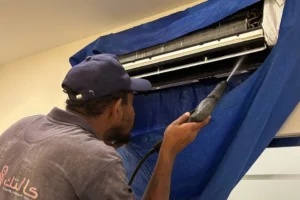
This is the most common reason an AC stops cooling well. Considering local atmospheric conditions and blowing dust. It clogs the filter quickly and blocks the air flow. The AC then works harder and cools less.
Fix: Take out the filter and check it. If it looks gray or blocked, wash it with water and let it dry fully. Clean the filters once a month in summer. Replace them if they are torn or old.
Sometimes the problem is not the AC at all. The thermostat may be set to “Fan” instead of “Cool”. The temperature may also be set too high. Batteries in the thermostat can run out too.
Fix: Set the mode to Cool and lower the temperature by a few degrees. If the screen is blank or acts strange, change the batteries.
Refrigerant is the gas that takes heat out of your room. If the level is low the AC blows air that is only slightly cool. Low gas almost always means there is a leak somewhere. Gas is not used up like fuel.
Fix: This needs a professional. A technician will find the leak and repair it before refilling the gas. Just topping up the gas without fixing the leak will bring the problem back in a few weeks.
If you see ice on the indoor unit or the pipes your coil is frozen. This happens because of dirty filters or low gas. Ice stops the AC from cooling and can lead to water leaks.
Fix: Turn the AC off and let the ice melt for a few hours. Then check the filter. If the coil freezes again call a technician. Running a frozen AC can damage the compressor.
The outdoor unit sends heat outside. In Qatar the outdoor unit sits in sun and dust all day. Sand and dirt build up on the coils and the unit cannot release heat properly.
Fix: Switch off the power and gently clean the outside of the unit with a soft brush. Do not spray high pressure water on the fins. Keep the area around the unit clear of boxes and plants. A yearly deep clean by a technician is a good idea.
The capacitor gives the compressor and fan motor the power to start. If it fails the outdoor fan may not spin. You may hear a humming sound but the unit does not start. The air inside will turn warm.
Fix: Do not open the unit yourself. Electrical parts can be dangerous. A technician can test and replace the part quickly. This is a common repair in the summer months.
Your AC removes moisture from the air and sends it out through a drain pipe. In humid weather this pipe can get blocked with algae and dirt. Water then backs up and some AC units shut down to stop damage.
Fix: If you see water dripping near the indoor unit check the drain pipe. A technician can clear the blockage with the right tools. Regular servicing prevents this problem.
An AC that is too small will never cool a large room properly. This is common in offices after a renovation or when an extra room is added. A unit that is too big is also a problem because it cools too fast and does not remove humidity.
Fix: Ask an AC expert to check the cooling load of your space. If the unit is wrong for the room you may need to upgrade or add another unit. Good insulation and sealed windows also help a lot.
Most AC units last 10 to 15 years. In Qatar the heat is hard on equipment so the life can be shorter without care. Old units lose cooling power and use more electricity. Skipping service makes it even worse.
Fix: Service your AC at least twice a year. For offices and large buildings a planned plan is better. An Annual Maintenance Contract keeps your system checked all year so small faults are found before they become breakdowns.
Simple jobs like cleaning filters and checking the thermostat are fine to do yourself. Call a technician if:
If your AC fails in the middle of summer you can read our guide on emergency AC repair in Qatar to know what to do while you wait for help.
The US Department of Energy also shares useful advice on central air conditioner care. For help with saving power at home you can visit the Kahramaa website for local awareness tips.
Caltiq provides professional AC maintenance services in Qatar for homes, offices and large buildings. Our team works on chillers, VRF and DX systems. We find the real cause and fix it the first time.
Contact Caltiq today or call +974 333 18558 to book a visit.
The most common reasons are dirty filters, low refrigerant gas or a dirty outdoor unit. Dust and heat make these problems more common in Qatar. Start by cleaning the filter. If that does not help call a technician.
Service your AC at least twice a year. Once before summer and once after. For commercial buildings or heavy use a quarterly service is better.
No. Gas refilling needs special tools and training. Also low gas means there is a leak. A technician must fix the leak first or the gas will run out again.
A frozen AC is usually caused by a dirty filter or low refrigerant. Turn the unit off and let the ice melt. Then clean the filter. If it freezes again get it checked.
The cost depends on the problem. Cleaning is cheap while compressor or gas leak repairs cost more. A site visit and inspection will give you a clear quote before any work starts.
If your unit is more than 10 to 12 years old and needs repairs often replacing it can save money. New units use less power and cool better. A technician can help you compare both options.
A pre-winter facility audit is one of the most cost-effective steps a property manager can take. By checking HVAC, roofs, drainage, electrical, plumbing and safety systems early, you protect occupants, reduce emergency spending and keep your assets performing through the season and beyond.
Ready to get your property winter-ready? Contact CALTIQ for a professional facility audit and preventive maintenance plan tailored to your building.
WhatsApp us